





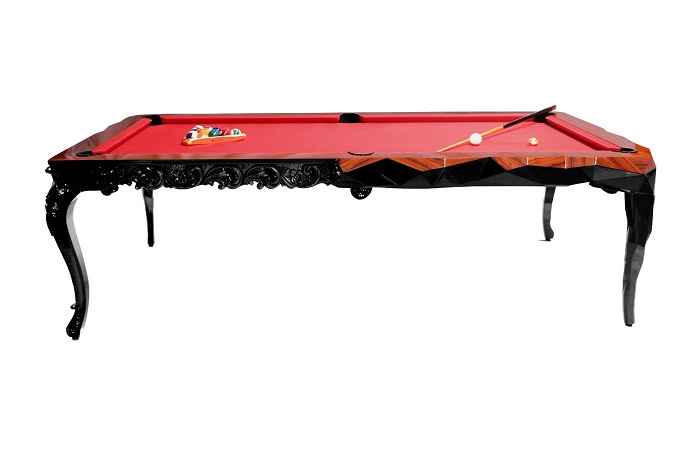
Luxury interiors are changing. The modern private residence is no longer designed only for visual impact or quiet retreat. It is becoming a place for social rituals, personal expression, and tactile experiences. In this context, the billiard table has returned, not as a nostalgic relic, but as a refined design object with architectural relevance.
Today’s bespoke billiard tables are conceived as functional sculptures. They reflect the values of contemporary design: individuality, material honesty, and seamless integration into living spaces. This article explores why custom billiard tables are gaining renewed attention among architects, collectors, and interior designers, and how they are shaping the future of exclusive interiors.
Billiard Tables Are No Longer Hidden Away
For decades, billiard tables were confined to basements, game rooms, or private clubs. They were treated as purely recreational objects, visually disconnected from the rest of the interior. That mindset has shifted.
In high-end residential projects, billiard tables are now placed confidently in open-plan living areas, private libraries, or even formal salons. This transition demands a new approach to design.
“A billiard table in a modern home should not interrupt the architecture. It should complete it.”
Custom design allows the table to echo the language of the space. Proportions, finishes, and materials are carefully calibrated so the piece feels intentional rather than intrusive.
Why Customization Matters in Exclusive Interiors
True luxury is no longer defined by brand visibility or ornamentation. It is defined by relevance. A bespoke billiard table is created for one space, one client, and one lifestyle.
Customization goes far beyond choosing a wood finish. It involves architectural thinking.
- Scale and proportion tailored to the room’s dimensions and ceiling height.
- Material harmony that aligns with floors, wall panels, and furniture.
- Functional adaptation such as convertible dining or conference configurations.
- Visual weight control so the table feels balanced within the interior.
These decisions are what transform a billiard table into a permanent element of the interior rather than a movable object.
The Dialogue Between Craft and Architecture
Bespoke billiard tables sit at the intersection of craftsmanship and architectural design. Their construction requires precision engineering, but their success depends on aesthetic restraint.
Designers increasingly collaborate with architects to ensure the table respects structural lines, symmetry, and spatial flow. In minimalist interiors, the table may appear monolithic and quiet. In more expressive environments, it may feature sculptural legs or contrasting textures.
What remains constant is the demand for authenticity in materials.
Materials That Define Character
The materials chosen for a custom billiard table often mirror those used throughout the home.
- Solid hardwoods for warmth and tradition.
- Natural stone or slate for structural integrity.
- Leather or technical fabrics that age gracefully.
- Metal accents in brass, bronze, or brushed steel.
Each surface is meant to be touched. In luxury interiors, tactility is as important as visual appeal.
Billiard Tables as Social Architecture
One of the most overlooked aspects of billiard tables is their social function. Unlike sofas or dining tables, a billiard table encourages movement, conversation, and informal interaction.
In private residences, it often becomes a focal point for gatherings. Guests circle the table, observe the game, and engage in spontaneous dialogue. This dynamic makes the billiard table a form of social architecture.
“The best-designed rooms are those that invite people to stay longer without realizing why.”
A well-designed billiard table contributes to this effect by creating a shared activity that feels natural within the space.
The Influence of Italian Design Philosophy
Italian design has played a significant role in redefining how leisure objects are perceived in luxury interiors. The emphasis is on balance, proportion, and emotional resonance.
Brands such as Vismara Design have contributed to this shift by approaching gaming furniture with the same rigor applied to architectural elements. Their work demonstrates how a billiard table can embody elegance without sacrificing performance.
This influence is visible in the clean lines, refined detailing, and understated confidence that characterize many contemporary bespoke tables.
Performance Still Matters
Design alone is not enough. A billiard table must perform flawlessly. In bespoke production, performance is never compromised for aesthetics.
Professional-grade slate, precision-leveled frames, and tournament-standard cloths are integrated discreetly beneath refined exteriors. The result is a table that plays as well as it looks.
This duality is essential. The most successful bespoke tables are those that satisfy both seasoned players and design-conscious owners.
From Entertainment to Identity
In exclusive interiors, every object communicates something about the owner. A bespoke billiard table often reflects values such as craftsmanship, patience, and appreciation for analog experiences.
Unlike digital entertainment systems that become obsolete, a custom billiard table gains character over time. Subtle wear, softened leather, and polished edges tell a story.
It becomes part of the home’s identity.
Designing for Longevity
Longevity is a defining principle of contemporary luxury. Bespoke billiard tables are designed to last decades, both structurally and aesthetically.
This means avoiding trends that age quickly. Neutral palettes, timeless forms, and high-quality materials ensure the table remains relevant even as interior styles evolve.
Many designers now describe bespoke billiard tables as heirloom objects. They are meant to be passed down, relocated, and recontextualized without losing their presence.
The Future of Leisure in Luxury Spaces
As homes continue to evolve into multifunctional environments, the role of leisure furniture will expand. Billiard tables, once marginal, are now central to this evolution.
They represent a return to shared physical experiences in a world dominated by screens. They also demonstrate how customization can elevate an object from utility to artistry.
In the coming years, we can expect bespoke billiard tables to become even more integrated into architectural planning, conceived not as additions, but as foundational elements of interior design.
Bespoke billiard tables are no longer about recreation alone. They are about space, identity, and craftsmanship. In exclusive interiors, they serve as quiet statements of taste and intention.
When designed with care, a billiard table becomes more than furniture. It becomes a place where design, movement, and human connection converge.